Microneedling Market Size, Share & Industry Analysis, By Needle Material (Silicon, Metal), By Product (Dermarollers, Dermapen), By Type (Laser, RF), By Application, By Region, and Regional Forecast, 2026-2034
 Download Free Sample
Microneedling Market Overview
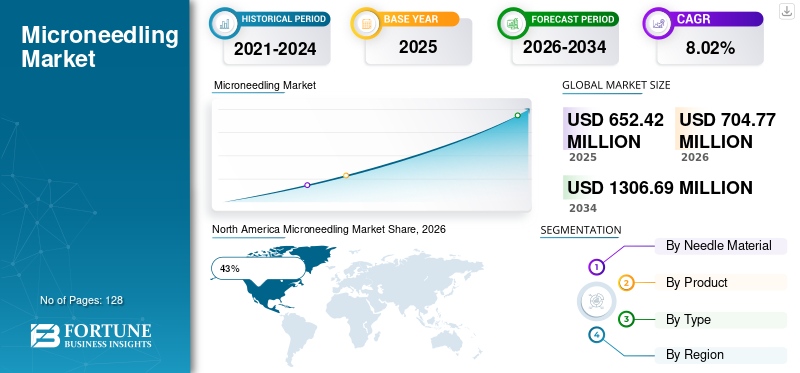
The microneedling market size was valued at USD 652.42 Million in 2025. The market is projected to grow from USD 704.77 Million in 2026 to USD 1306.69 Million by 2034, exhibiting a CAGR of 8.02% during the forecast period.

The microneedling market is experiencing strong expansion due to increasing demand for minimally invasive aesthetic procedures across dermatology clinics, medical spas, and cosmetic treatment centers. Growing consumer awareness regarding skin rejuvenation, acne scar reduction, anti-aging therapies, and collagen induction treatments continues to support adoption. The market is benefiting from technological advancements in automated microneedling devices, radiofrequency-assisted systems, and precision-controlled treatment platforms. Healthcare providers are increasingly integrating microneedling procedures into comprehensive aesthetic treatment portfolios, creating new opportunities for manufacturers and distributors. The microneedling market Report highlights rising procedural volumes, expanding treatment applications, and increasing investment in professional skincare technologies worldwide.
The United States remains the most influential market for microneedling technologies due to a large aesthetic medicine industry, advanced dermatology infrastructure, and strong consumer spending on cosmetic procedures. Dermatology clinics and medical spas continue to expand treatment offerings focused on skin tightening, wrinkle reduction, pigmentation management, and scar revision. Regulatory oversight and physician-led adoption of advanced RF microneedling systems have strengthened clinical confidence. The presence of leading manufacturers, extensive training programs, and high procedural awareness contributes to market maturity. The USA microneedlin
Download Free sample to learn more about this report.
Microneedling Market Key Takeaways
 Global Market Size & Forecast
- 2025 Market Size: USD 652.42 Million
- 2026 Market Size: USD 704.77 Million
- 2034 Forecast Market Size: USD 1,306.69 Million
- CAGR: 8.02% from 2026–2034
 Market Share
- North America dominated with a revenue share of 43% in 2025.
- Metal microneedles held the largest needle material share at approximately 62%.
- Dermapen systems accounted for the largest product share at approximately 59%.
 Key Regional Highlights
North America
North America led the market with a 43% share in 2025, supported by strong demand for advanced aesthetic treatments.
Europe
Europe accounted for 27% of the market, driven by growing adoption of minimally invasive cosmetic procedures.
Asia-Pacific
Asia-Pacific held a 22% share, supported by expanding medical aesthetics and rising consumer interest in skin rejuvenation.
U.S
The U.S. market is supported by high demand for aesthetic procedures and increasing adoption of advanced microneedling technologies.
Japan
Japan accounted for 26% of the Asia-Pacific market, supported by advanced dermatology services and growing demand for non-surgical aesthetic treatments.
Read More

g market Analysis indicates continued demand for premium treatment devices and personalized skin rejuvenation solutions across urban and suburban healthcare settings.
Microneedling Market Latest Trends
One of the most prominent microneedling market trends is the integration of radiofrequency technology with traditional microneedling procedures. Clinics increasingly prefer RF-assisted systems because they offer deeper tissue remodeling, improved collagen stimulation, and enhanced skin tightening outcomes. This trend is particularly visible among premium aesthetic centers seeking differentiated treatment capabilities.
Download Free sample to learn more about this report.
Another important development involves the growing popularity of combination therapies. Providers are increasingly pairing microneedling procedures with platelet-rich plasma treatments, topical growth factors, exosome therapies, and advanced skincare protocols. Such combinations are designed to improve treatment outcomes while increasing patient satisfaction.
The market is also witnessing rising demand for automated pen-based devices equipped with adjustable needle depths and digital treatment controls. These systems improve procedural consistency and treatment customization. Additionally, manufacturers are focusing on disposable cartridge technologies that support infection control standards and clinical safety.
Home-use microneedling products continue to gain visibility, although professional-grade treatments remain dominant due to superior efficacy and practitioner supervision. Digital marketing, social media influence, and growing interest in preventive aesthetic care are further accelerating industry expansion. The microneedling market Forecast indicates continued innovation in energy-based systems and personalized skin treatment platforms.
Microneedling Market Dynamics
Driver
Rising Demand for Minimally Invasive Aesthetic Procedures
The primary growth driver for the microneedling market is the increasing preference for minimally invasive cosmetic treatments. Consumers are actively seeking procedures that provide visible skin improvement without extended recovery periods associated with surgical interventions. Microneedling fulfills this requirement by stimulating natural collagen production while addressing concerns such as wrinkles, acne scars, enlarged pores, pigmentation irregularities, and skin laxity.
A growing aging population combined with increased aesthetic awareness among younger demographics has expanded the addressable patient base. Medical spas and dermatology clinics are reporting stronger demand for treatments that improve appearance while maintaining natural results. Technological advancements have also improved treatment precision, safety, and comfort, making procedures more attractive to patients. The expansion of aesthetic medicine networks and practitioner training programs further supports market penetration. As a result, the microneedling market growth trajectory continues to be supported by broad consumer acceptance and expanding clinical applications.
Restraint
High Treatment Costs and Equipment Investment Requirements
Despite strong demand, the microneedling market faces challenges related to equipment acquisition costs and treatment affordability. Advanced RF microneedling platforms require substantial capital investment from clinics and aesthetic centers. Smaller practices often encounter financial barriers when adopting premium technologies, limiting market penetration in certain regions.
Patients may also view multiple-session treatment plans as expensive, particularly when procedures are combined with adjunctive therapies such as PRP or regenerative skincare products. Cost sensitivity is more pronounced in developing markets where discretionary spending on aesthetic procedures remains limited. Maintenance expenses, consumable cartridge replacement, staff training requirements, and regulatory compliance costs further influence purchasing decisions. These financial considerations can slow adoption rates among independent clinics and create competitive pressure within the industry. Consequently, pricing remains an important factor affecting overall market expansion and procurement decisions.
Opportunity
Expansion of Regenerative and Personalized Skincare Treatments
Significant opportunities are emerging through the convergence of microneedling technologies and regenerative aesthetics. Clinics increasingly incorporate growth factors, stem-cell-derived formulations, exosomes, and customized skincare regimens into treatment protocols. This trend creates opportunities for device manufacturers to develop integrated platforms that support advanced therapeutic applications.
The increasing focus on personalized medicine is also reshaping the aesthetic industry. Patients are demanding treatment plans tailored to skin type, age, pigmentation characteristics, and specific cosmetic concerns. Manufacturers that provide adjustable energy settings, customizable needle depths, and data-driven treatment planning tools are gaining competitive advantages. Emerging markets in Asia-Pacific, Latin America, and the Middle East offer additional growth opportunities due to rising disposable incomes and expanding medical aesthetics infrastructure. These factors collectively strengthen the long-term microneedling market Outlook and create favorable conditions for innovation-driven growth.
Challenge
Safety Concerns and Regulatory Scrutiny
The market faces ongoing challenges related to treatment safety, practitioner expertise, and regulatory compliance. Improper use of advanced microneedling devices can result in adverse effects including burns, scarring, pigmentation changes, and tissue damage. Such risks increase when treatments are performed by inadequately trained personnel.
Regulatory authorities in several regions are strengthening oversight of aesthetic devices and procedural standards. Manufacturers must navigate complex approval processes, clinical documentation requirements, and post-market surveillance obligations. In addition, inconsistent regulations across countries can complicate international expansion strategies. Consumer awareness regarding safety has increased, leading patients to prioritize qualified practitioners and clinically validated technologies. Companies operating in the Microneedling industry report landscape must therefore invest heavily in training programs, clinical evidence generation, and compliance initiatives. Balancing innovation with patient safety remains one of the industry's most significant operational challenges.
Microneedling Market Segmentation
By Needle Material
Silicon-based microneedles have gained attention due to their precision engineering capabilities and compatibility with advanced manufacturing processes. These needles are frequently used in technologically sophisticated treatment systems where consistent penetration depth and uniform performance are critical. Silicon materials support the production of highly controlled microstructures, making them suitable for specialized dermatological applications.
Within the microneedling market share analysis, silicon needle systems account for approximately 38% of total demand. Adoption is particularly strong among premium treatment providers seeking enhanced procedural accuracy. Manufacturers continue to invest in research aimed at improving durability, treatment efficiency, and patient comfort. Silicon-based designs are increasingly integrated into next-generation aesthetic platforms focused on advanced skin rejuvenation and transdermal delivery applications.
Metal microneedles remain the dominant segment due to their strength, durability, and widespread clinical acceptance. Stainless steel and titanium-based needles are commonly utilized in professional microneedling devices because they provide reliable penetration and maintain structural integrity throughout treatment procedures. Their cost-effectiveness also contributes to widespread market adoption.
The metal needle segment represents nearly 62% of the global market. Dermatology clinics, cosmetic surgery centers, and medical spas continue to prefer metal-based systems because they support high procedural volumes and consistent treatment outcomes. Manufacturers are introducing enhanced coatings and improved needle geometries to optimize patient comfort and reduce tissue trauma. As professional treatment demand increases, metal microneedle technologies are expected to maintain a leading position within the microneedling market research report landscape.
To know how our report can help streamline your business, Speak to Analyst
By Product
Dermarollers remain widely used due to their affordability, simplicity, and versatility across multiple treatment indications. These devices are commonly utilized for superficial skin rejuvenation, scar management, and texture improvement procedures. Many practitioners employ dermarollers as entry-level solutions before transitioning patients to more advanced energy-based treatments.
Dermarollers account for approximately 41% of product-based market demand. Their accessibility supports adoption across developing economies where cost considerations significantly influence purchasing decisions. Manufacturers continue introducing ergonomic designs, improved needle configurations, and disposable systems that enhance safety and ease of use. The segment maintains relevance within both professional and consumer-focused skincare markets, supporting sustained demand across diverse geographic regions.
Dermapen systems have emerged as a preferred solution for professional aesthetic practices seeking enhanced treatment precision. These automated devices provide adjustable needle depths and controlled penetration patterns, enabling practitioners to customize procedures based on patient-specific skin conditions. Their ability to improve procedural consistency has contributed significantly to adoption rates.
The Dermapen segment holds approximately 59% market share. Strong demand originates from dermatology clinics and medical spas focused on advanced anti-aging treatments, acne scar reduction, and collagen induction therapies. Manufacturers are enhancing digital controls, disposable cartridge systems, and treatment customization capabilities. As providers increasingly prioritize precision and efficiency, Dermapen technologies continue strengthening their position within the Microneedling industry analysis framework.
By Type
Laser-assisted microneedling treatments combine mechanical stimulation with laser energy to improve skin texture, pigmentation, and rejuvenation outcomes. These procedures are commonly adopted in advanced aesthetic centers that offer comprehensive skin resurfacing solutions. Providers often utilize laser-assisted approaches for patients requiring targeted correction of visible skin concerns.
This segment accounts for approximately 44% of technology-based demand. Clinical preference is driven by the ability to address multiple skin issues within a single treatment protocol. Manufacturers are focusing on improved energy delivery systems, treatment safety features, and workflow integration. Continued innovation is expected to support broader adoption across premium dermatology and cosmetic treatment facilities.
RF microneedling has become one of the fastest-growing segments due to its ability to stimulate collagen production while providing deeper tissue remodeling effects. The technology is increasingly utilized for skin tightening, wrinkle reduction, scar treatment, and overall rejuvenation. Patients often favor RF-assisted procedures because they provide noticeable improvements with limited downtime.
RF systems represent approximately 56% of technology segment demand. Clinics are investing heavily in these platforms to differentiate service offerings and attract higher-value patient segments. Manufacturers continue enhancing energy precision, treatment customization, and safety monitoring capabilities. The increasing preference for advanced non-surgical cosmetic procedures supports continued expansion of this segment within the microneedling market insights landscape.
Microneedling Market Regional Outlook
North America Microneedling Market Share, 2026 (%)
To get more information on the regional analysis of this market, Download Free sample
North America
North America remains the largest regional market, supported by advanced healthcare infrastructure, strong consumer awareness, and widespread adoption of aesthetic treatments. Dermatology clinics and medical spas continue investing in sophisticated microneedling systems to meet increasing demand for minimally invasive procedures. The region benefits from established reimbursement awareness, professional training programs, and high procedural volumes.
Technological innovation remains a major competitive factor across the United States and Canada. Manufacturers frequently introduce upgraded RF platforms, automated devices, and safety-enhanced treatment systems. The region accounts for approximately 43% of the global microneedling market share, reflecting strong demand from both cosmetic and therapeutic treatment segments.
Europe
Europe represents a mature and innovation-focused market characterized by strong demand for skin rejuvenation procedures and medically supervised aesthetic treatments. Consumers increasingly seek advanced therapies that provide natural-looking results with minimal recovery periods. Dermatology networks and aesthetic clinics continue expanding service portfolios to address evolving patient preferences.
Regional manufacturers and international brands actively compete through technology development and practitioner education initiatives. The European market contributes approximately 27% of global demand, supported by growing awareness of collagen induction therapies, anti-aging treatments, and advanced skincare solutions.
Germany Microneedling Market
Germany serves as one of Europe's most significant aesthetic medicine markets due to its sophisticated healthcare system and strong emphasis on clinical quality standards. Dermatologists and cosmetic practitioners increasingly adopt advanced microneedling systems for scar treatment, skin resurfacing, and anti-aging procedures. Patient demand is supported by rising interest in evidence-based cosmetic therapies and preventative skincare approaches.
Medical technology innovation remains a key competitive advantage within the German market. Providers prioritize devices with validated clinical performance, safety certifications, and advanced treatment customization features. Germany represents approximately 24% of the European microneedling market, supported by strong practitioner expertise and consistent investment in aesthetic medicine technologies.
United Kingdom Microneedling Market
The United Kingdom market continues expanding as consumers increasingly embrace non-surgical cosmetic procedures. Medical spas, dermatology clinics, and private aesthetic practices are actively incorporating microneedling technologies into comprehensive skin treatment programs. Demand is particularly strong among patients seeking wrinkle reduction, pigmentation correction, and acne scar management.
Digital marketing and social media influence have contributed to increased awareness of professional skin rejuvenation treatments. Clinics are investing in RF-enabled platforms and advanced automated systems to improve treatment outcomes and patient satisfaction. The United Kingdom accounts for approximately 21% of Europe's microneedling market, reflecting strong adoption across both metropolitan and regional healthcare centers.
Asia-Pacific
Asia-Pacific is emerging as the fastest-evolving regional market due to rising disposable incomes, expanding medical tourism, and increasing interest in aesthetic enhancement procedures. Consumers across major economies are actively seeking advanced skincare treatments that address pigmentation, aging, and texture-related concerns. Urbanization and growing beauty consciousness continue supporting industry expansion.
Manufacturers are targeting the region through localized distribution networks, training partnerships, and product launches tailored to diverse skin types. Asia-Pacific represents approximately 22% of global market demand and remains a critical growth destination for international and regional device manufacturers.
Japan Microneedling Market
Japan's microneedling sector benefits from a technologically advanced healthcare environment and strong consumer focus on skin quality and anti-aging treatments. Aesthetic clinics increasingly utilize precision-based devices designed to deliver consistent outcomes while minimizing patient discomfort. Demand is particularly strong for treatments addressing fine lines, skin texture, and collagen stimulation.
The country's emphasis on innovation has encouraged adoption of automated microneedling systems and integrated treatment protocols. Providers often combine procedures with advanced skincare solutions to maximize treatment effectiveness. Japan accounts for approximately 26% of the Asia-Pacific microneedling market, supported by premium consumer spending and high clinical standards.
China Microneedling Market
China continues to experience rapid market development driven by expanding middle-class populations, increasing beauty awareness, and significant growth in aesthetic medicine services. Consumers are increasingly willing to invest in professional skincare treatments that improve appearance and support long-term skin health. Urban centers remain major hubs for advanced cosmetic procedures.
Domestic and international manufacturers are expanding their presence through strategic partnerships, product localization, and practitioner education initiatives. Demand for RF microneedling technologies is particularly strong among premium aesthetic clinics. China represents approximately 34% of the Asia-Pacific market, making it one of the most influential growth centers within the global industry.
Rest of World
The Rest of World region includes Latin America, the Middle East, and Africa, where aesthetic medicine adoption continues to increase steadily. Growing urban populations, rising disposable incomes, and improving healthcare infrastructure are creating favorable conditions for market development. Cosmetic treatment awareness is expanding through digital platforms and international beauty trends.
Manufacturers are strengthening regional distribution channels while supporting practitioner training and technology adoption. Demand is especially noticeable in major metropolitan centers where consumers seek advanced skin rejuvenation solutions. The Rest of World region contributes approximately 8% of global market demand and presents long-term opportunities for expansion-focused industry participants.
List of Top Microneedling Companies
- Lumenis
- Cutera
- Cynosure
- Endymed Medical
- Candela Medical
- Dermaconcepts
- Eclipse Aesthetics
- Dermaquip
- Lutronic
- Dermaroller GmbH
Top Two Companies by Market Share
- Candela Medical – 16%
- Cynosure – 14%
Investment Analysis and Opportunities
The microneedling market presents attractive investment opportunities due to growing demand for minimally invasive aesthetic procedures and continuous technology innovation. Venture capital firms, private equity groups, and strategic healthcare investors are increasingly targeting aesthetic device manufacturers with differentiated treatment platforms. Investment activity is particularly concentrated in RF microneedling technologies, automated treatment systems, and regenerative medicine integration.
Manufacturers are allocating significant resources toward research and development, clinical validation studies, and global distribution expansion. Emerging markets provide opportunities for infrastructure investment, practitioner training programs, and localized manufacturing initiatives. Strategic partnerships between device developers and aesthetic clinic networks are also becoming more common. Investors view the sector favorably because of recurring consumable revenue streams, growing treatment awareness, and expanding patient demographics. These factors continue strengthening the long-term microneedling market opportunities landscape.
New Product Development
Product innovation remains a central competitive strategy within the microneedling industry. Manufacturers are developing advanced systems featuring real-time energy monitoring, customizable treatment protocols, and improved safety mechanisms. New devices increasingly integrate digital interfaces that allow practitioners to tailor procedures according to patient-specific skin conditions and treatment goals.
Another major innovation area involves disposable cartridge technology designed to improve infection control and workflow efficiency. Companies are also exploring artificial intelligence-assisted treatment planning and enhanced imaging systems capable of improving procedural precision. Integration with regenerative therapies such as exosomes and growth-factor delivery systems is generating additional product development activity. These advancements are helping manufacturers differentiate offerings while supporting broader clinical adoption across dermatology and aesthetic medicine sectors.
Five Recent Developments (2023–2025)
- Candela Medical expanded its RF microneedling portfolio through enhanced treatment customization features and upgraded practitioner workflow capabilities.
- Cynosure strengthened its aesthetic device ecosystem by introducing advanced skin rejuvenation technologies compatible with comprehensive treatment protocols.
- Cutera increased investment in practitioner education programs focused on minimally invasive skin remodeling procedures and energy-based treatment systems.
- Lutronic expanded international distribution channels for next-generation skin tightening and collagen stimulation platforms across Asia-Pacific markets.
- Endymed Medical introduced upgraded radiofrequency delivery enhancements designed to improve procedural precision and patient treatment consistency.
Report Coverage
The microneedling market Report provides comprehensive coverage of industry structure, competitive positioning, technology trends, product innovation, and regional demand patterns. The study evaluates market dynamics including drivers, restraints, opportunities, and challenges influencing industry performance. Detailed segmentation analysis examines needle materials, product categories, technology types, and application-specific developments across key end-user sectors.
Request for Customization to gain extensive market insights.
The report further assesses regional market performance across North America, Europe, Asia-Pacific, and Rest of World territories. Company profiling includes strategic initiatives, product portfolios, technology advancements, and competitive developments among leading manufacturers. Investment trends, regulatory considerations, and emerging business opportunities are also analyzed to support strategic decision-making. The coverage framework is designed to provide stakeholders with actionable microneedling market insights, supporting planning, expansion, and investment activities across the global industry.
Frequently Asked Questions
According to Fortune Business Insights, the global microneedling market was valued at USD 652.42 million in 2025 and is projected to reach USD 1,306.69 million by 2034.
The market is expected to grow at a CAGR of 8.02% during the forecast period of 2026–2034.
RF microneedling was the leading type segment, accounting for approximately 56% of technology segment demand. This dominance was driven by deeper tissue remodeling, collagen stimulation, and skin-tightening benefits.
Key players include Lumenis, Cutera, Cynosure, Endymed Medical, Candela Medical, and Dermaconcepts.
Major trends include the integration of radiofrequency technology with microneedling and growing adoption of combination therapies, such as PRP, growth factors, and exosome treatments. North America led the market with approximately 43% share.



- 2021-2034
- 2025
- 2021-2024
- 128
-

(Offer valid till 15th Oct 2026)
Get 30-60 hrs Free Customization
Expand Regional and Country Coverage, Segments Analysis, Company Profiles, Competitive Benchmarking, and End-user Insights.













.webp)






-
US +1 833 909 2966 ( Toll Free )
-
Get In Touch With Us